
#1 - The Architecture of Measurement Systems
🔧 The Architecture of Measurement Systems – Principles and Practical Considerations
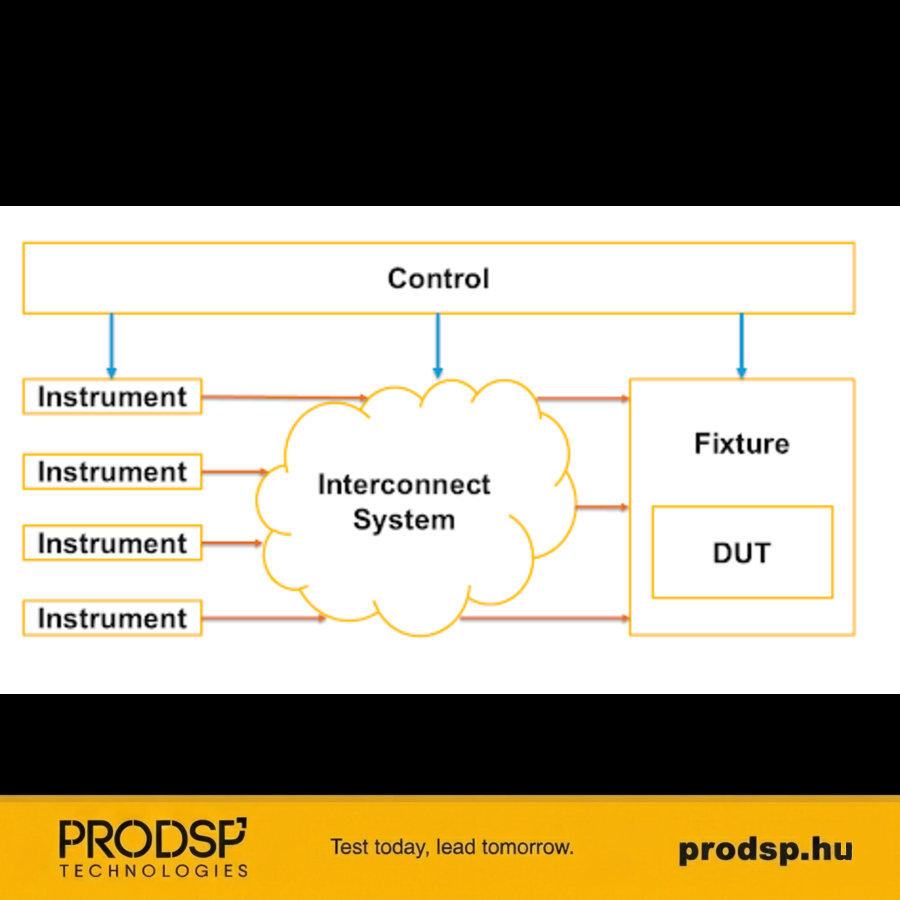
Building an industrial measurement system is not merely about assembling components, but about designing a precision-engineered architecture, where every element of the system has a clearly defined role. The objective is to bring the Device Under Test (DUT) into a specific state and record its response signals in a way that is repeatable, accurate, and verifiable.
At the core of ProDSP Technologies’ approach lies the coordinated operation of the following components:
🔹 DUT – the device under test
🔹 Fixture – ensures mechanical and electrical connection between the DUT and the measurement system
🔹 Instruments – responsible for signal generation and measurement
🔹 Interconnect system (wiring matrix) – forms the backbone of the system, managing all signal paths
🔹 Control unit – orchestrates the measurement cycles, signal generation, and data acquisition
The creation of such a measurement architecture is driven by the specific application requirements – including physical characteristics (temperature, voltage, light intensity, etc.), measurement ranges, and the necessary timing and synchronization conditions. All of these parameters are defined in the test protocol, which determines the functionality of the system.
ProDSP’s measurement systems are built on these principles – always tailored to the needs of the specific application environment.