
#7 - Current Voltage Transformation
❓How do you transform current into voltage? I → U 🤷♂️
In the previous post of this series, you learned how to measure current, where we also mentioned that one of the most important elements of current measurement methods is converting current signals into voltage.
Let’s look at the 3 most common options and their characteristics:
Shunt resistor
🔹 Cost-effective.
🔹 Must be placed in series with the circuit.
🔹 Must be chosen so that a sufficiently large voltage drop occurs across it.
🔹 The maximum power dissipation must not be exceeded.
Current transformer coil + Shunt resistor
🔹 More expensive than a shunt resistor.
🔹 Doesn’t need to be connected directly into the circuit.
🔹 Its output delivers a current proportional to the flowing current, which can be converted into voltage by closing it with a shunt.
🔹 Doesn’t work with DC current.
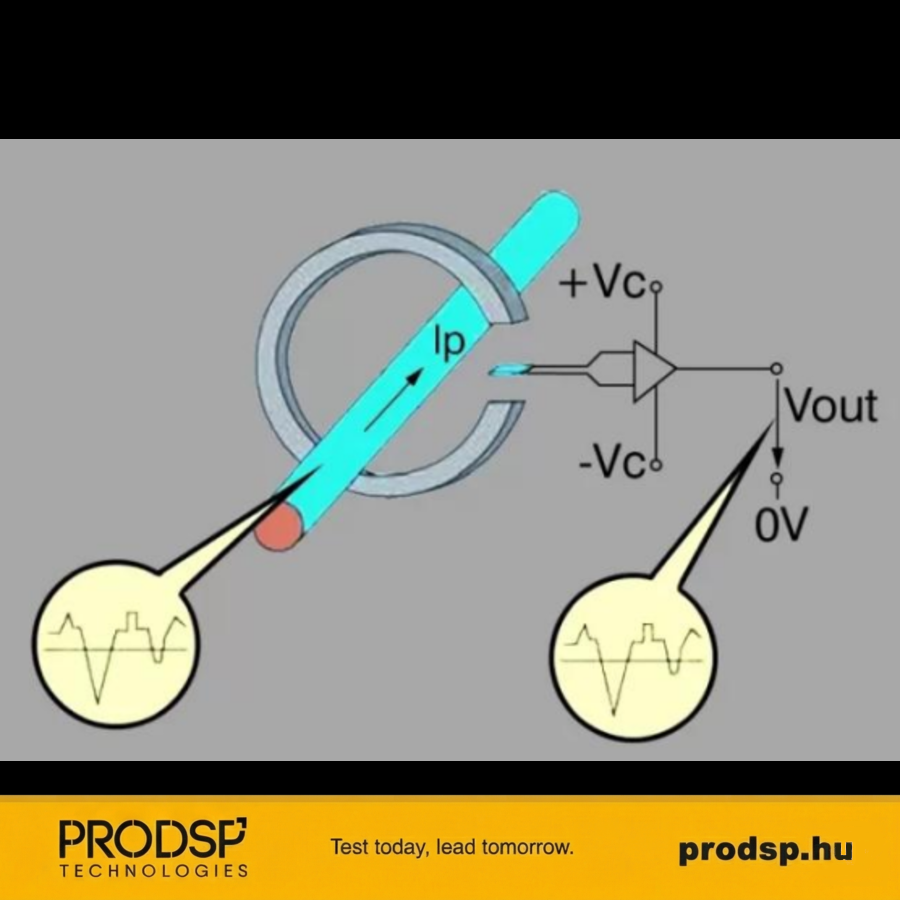
Active current transformer
🔹 The most expensive solution.
🔹 Doesn’t need to be connected directly into the circuit.
🔹 Converts the magnetic field into voltage.
🔹 Works in the DC domain as well.
🔹 Disadvantage: high offset error.
If you have any questions, feel free to reach out to us. With decades of measurement technology experience, we’re happy to support you! 🤝
Download CurrentTransformation.pdf