
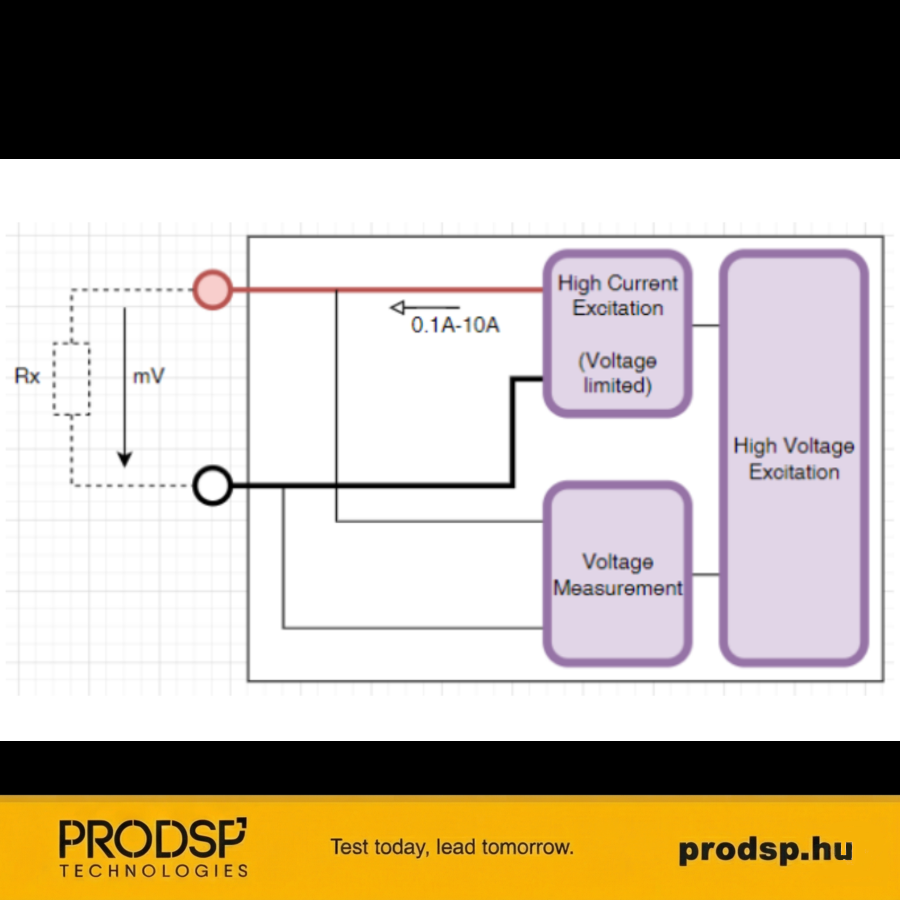
#11 - Ground Bonding Resistance Testing
⚡ Ground Bonding Resistance Testing
The purpose of ground bonding is simple:
👉 to ensure that in the event of a fault, hazardous current can safely flow to earth.
Why is this necessary?
👉 To ensure the safety of operators and end users!
How do we know our ground bonding solutions work properly?
👉 They must be measured and tested — but how we do it is crucial!
The challenge?
👉 The resistance to be measured is often in the milliohm range.
In this range, every contact and cable matters.
Key points to keep in mind:
🔹 High test current is required
⤷ In the ampere or even 10-ampere range, so that a measurable voltage drop develops on very low resistances.
🔹 Contact resistance can distort the measurement
⤷ Poor connections can degrade the measurement and damage the instrument.
🔹 Two-wire measurement is not sufficient
⤷ 4-wire (Kelvin) measurement is recommended.
🔹 Instrument protection and safety shutdown are essential
⤷ Due to the high current, the system must be prepared for fault conditions.
🔹 Measurement error may be comparable to the value being measured
⤷ Every single milliohm counts.
❗ Measuring is not only a technical matter, but a life-safety concern.
ProDSP grounding test solutions are robust, fast, and automatable even in industrial environments. If you have questions, feel free to reach out — and follow us for more content. 🤝
Download GroundBonding.pdf