
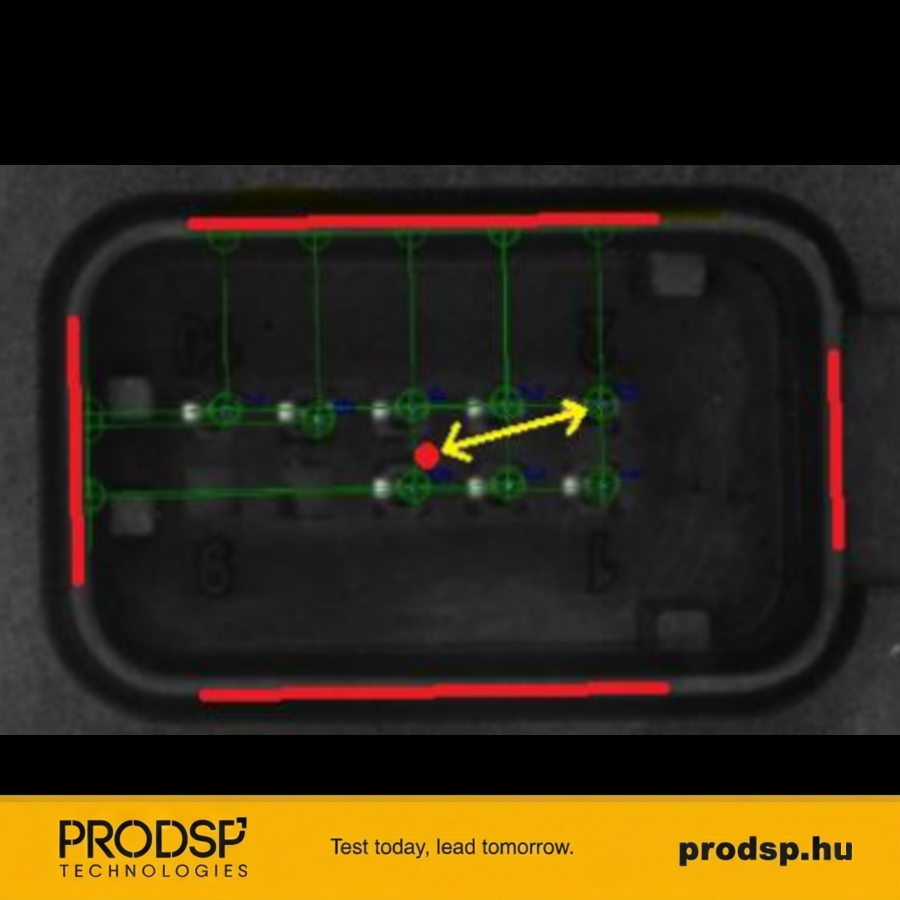
#18 - Geometric Optical Measurements Overview
📐 Geometric Optical Measurement Systems – Key Elements and Selection Criteria
The core tasks of machine vision — size measurement, position determination, and shape inspection — are only reliable if the six fundamental system components are properly selected and aligned:
1️⃣ Illumination
⤷ The direction and type of light fundamentally determine which edges and surface details are visible.
⤷ Good contrast = good measurement.
2️⃣ Lens
⤷ Distortion, sharpness, and field of view.
⤷ One of the most critical parameters for achieving accuracy.
3️⃣ Camera
⤷ Resolution and sensitivity determine how detailed the captured data will be.
4️⃣ Calibration
⤷ The foundation of geometric accuracy.
⤷ Without distortion compensation and scaling, precise values cannot be obtained.
5️⃣ Mounting / Mechanical fixture
⤷ A stable mechanical position is just as important as a good camera.
⤷ If anything moves, the entire measurement becomes inaccurate.
6️⃣ Software
⤷ Algorithms analyze the image — contours, edges, patterns, defects.
⤷ Often the most expensive but also the most important part of the system.
The strength of a geometric measurement system always lies in the integration of its components — not in any single element.
At ProDSP, we have many years of experience in designing and implementing optical measurement systems, so feel free to contact us with any questions! 🤝
Download GeometricOpticalMeasurementOverview.pdf