
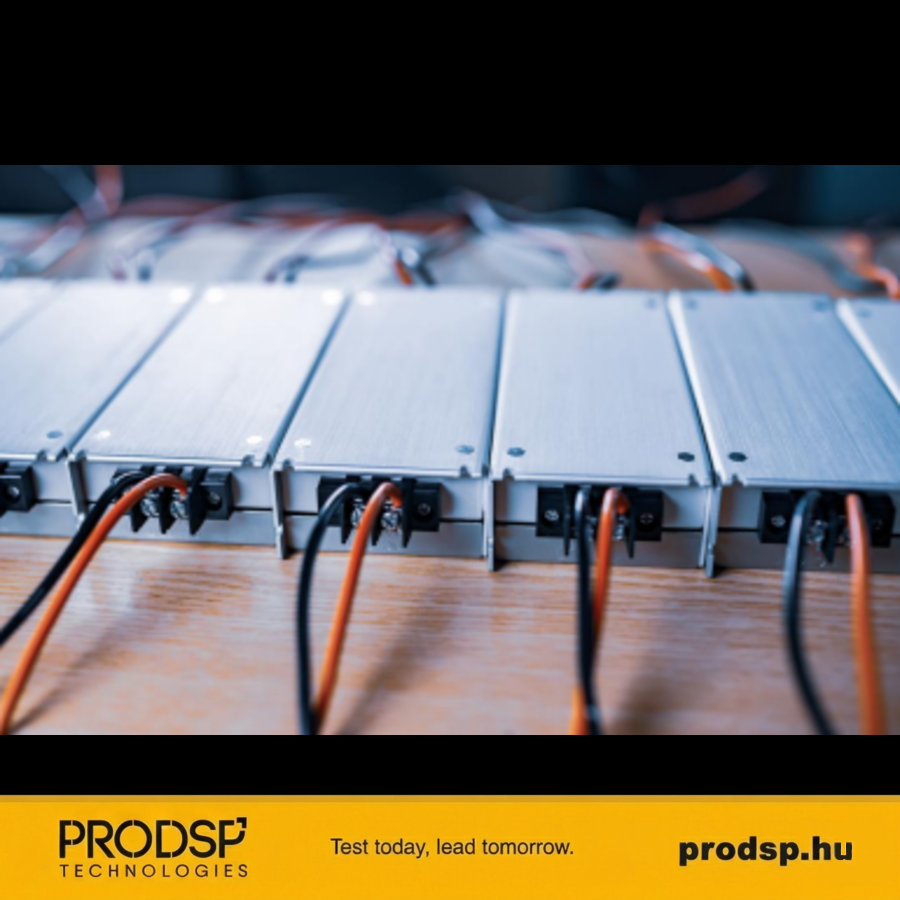
#29 - Electrical Power Supply
⚡ Electrical Power Supply in Test Systems
To operate products under test, a stable electrical power supply with adequate performance is required. This is fundamentally different from electrical excitation, where the deliverable power is typically not the critical factor. So, what should you pay attention to? Let me show you:
🔹 Power and accuracy
– In most cases, stability is more important than high accuracy
– If a precise output is required (<0.1%, <10 mV ripple), then a precision power supply is necessary
🔹 Isolation considerations
– Generally an expectation for functional testers
– Often omitted for flasher or ICT testing → significant cost reduction
🔹 Operating range
– Voltage range (can even be negative)
– Maximum current → typically specified in terms of power
– Higher voltage → lower current (at identical power)
🔹 Protection functions
– OCP: overcurrent protection (reduces the effects of short circuits)
– OVP: overvoltage protection (against programming errors)
🔹 Stability
– How quickly can it track changes?
– How stable is the output in steady-state operation?
– With simpler power supplies, stability is not a trivial question
🔹 Sense capability (4-wire supply)
– Compensates for voltage drop in cabling
– Often disabled at low currents (< a few mA)
– Built-in protections are required in case of sense line disconnection
🔹 Special functions
– Load / sink mode → battery simulation
– AC supply → clarification of phase count and frequency
Selecting the right power supply is not a template-driven task; the test objective always determines the appropriate instrument.
Download ElectricalPowerSupplyInTestSystems.pdf