
#34 - HIPOT – Insulation Resistance Measurement
⚡ HIPOT – Insulation Resistance Measurement
The purpose of insulation resistance measurement is to verify the insulation boundaries within a product.
Such boundaries may include, for example:
– enclosure ↔ connectors
– PE ↔ active conductors
– in inverters: AC ↔ DC side ↔ control circuitry
🔹 Measurement principle:
– Performed using DC voltage
– Resistance calculated from measured voltage and current
– Measurement is taken during the steady-state phase
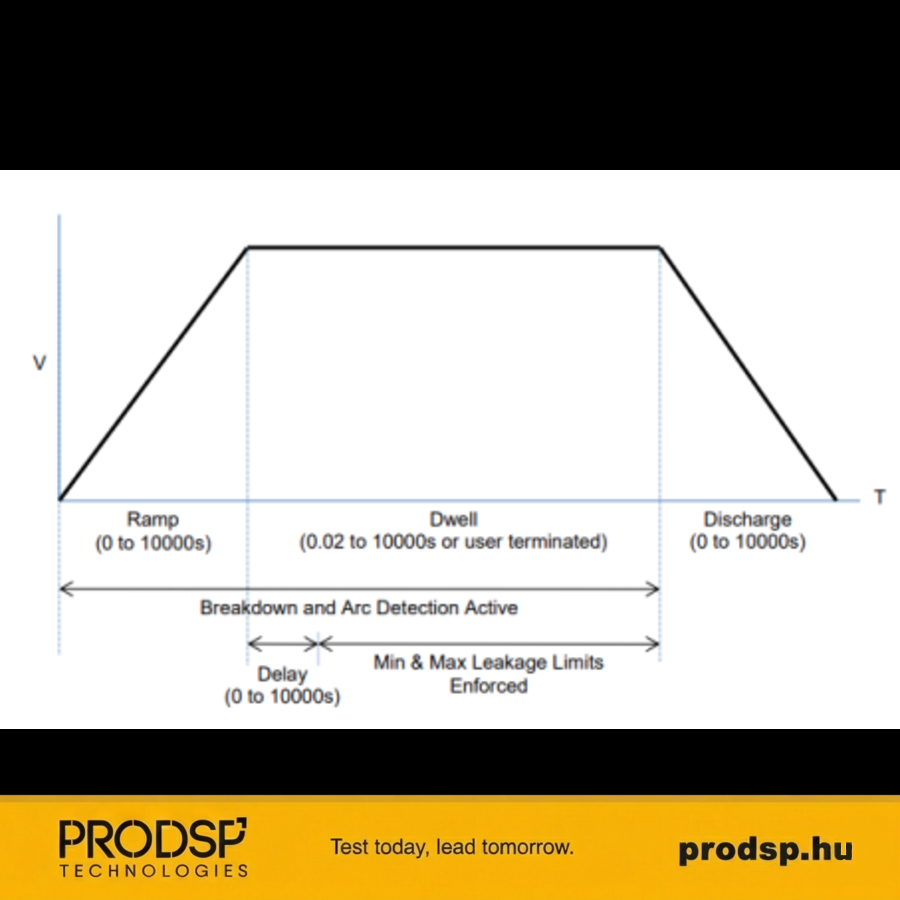
🔹 Measurement phases:
1. Charging
2. Voltage hold (measurement takes place here)
3. Discharging
🔹 Critical factors:
– Accurate current measurement → this determines the measurement range
– Filtering of initial transient currents (measurement delay)
– Handling high inrush currents caused by parasitic capacitances
🔹 Safety functions:
– Short-circuit detection (based on current slope)
– Arc detection (monitoring current pulses)
→ These are faster, but less accurate than the resistance measurement itself
🔹 Typical values:
– ~1–2 MΩ / 1000 V as a basic requirement
– Significantly higher values in precision systems
– For high-accuracy applications: teraohm-level measurements
👉 The elements of the measurement setup (cables, connectors) form a parallel resistance; therefore, their selection is at least as important as the measuring instrument itself.
Download 34_HIPOTInsulationResistance.pdf